Choosing how to decorate a home often comes down to deciding between two approaches: frequently renewing the interior to keep up with trends, or investing in durable choices that stand the test of time. Understanding what distinguishes these two approaches and measuring their real impact on the atmosphere of a space allows for more informed decisions for your house or apartment.
Sustainable decor vs. fast decor: what trade shows reveal
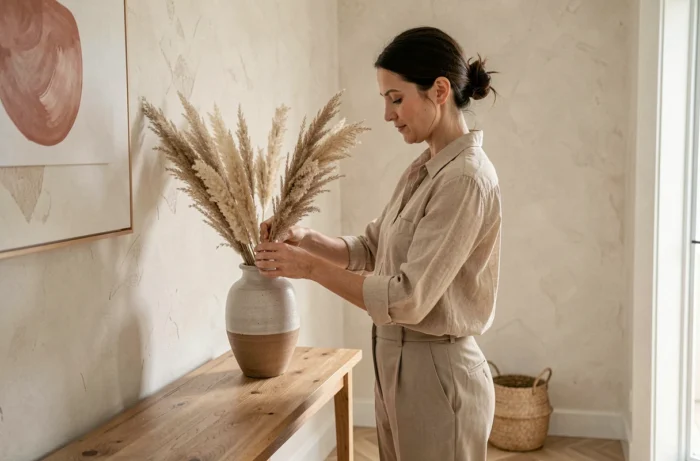
Design and furniture trade shows, such as Maison & Objet in its 2026 edition, have marked a clear shift towards more circular decoration. Exhibitors prioritize recycled materials, artisanal finishes, and pieces designed to last several decades.
This direction contrasts with the logic of “fast decor,” which encourages replacing cushions, lighting, and small furniture every season. The table below summarizes the differences between these two approaches based on the criteria that matter in daily life.
| Criterion | Fast decor (frequent renewal) | Sustainable decor (long-term investment) |
|---|---|---|
| Replacement frequency | Every 6 to 18 months | Every 5 to 15 years |
| Dominant materials | Particle board, plastic, synthetic textile | Solid wood, linen, ceramic, metal |
| Impact on perceived value of the property | Immediate “new” effect, rapid wear | Valuable patina, high-end perception |
| Cumulative cost over 10 years | Higher (repeated purchases) | Lower despite the initial investment |
| Stylistic coherence | Variable, depends on micro-trends | Stable, neutral or timeless palette |
Data from trade shows confirm that sustainable decor reduces the cumulative cost over the lifespan of a property. For each room in your home, the question is not “which style to choose” but “how long will this choice remain relevant.”
This observation aligns with a broader trend in the furniture sector, where you can learn more about Créa Décor and approaches that combine aesthetics and longevity in property decoration.
Pantone Color 2026 and neutral palette: a measurable decorative foundation
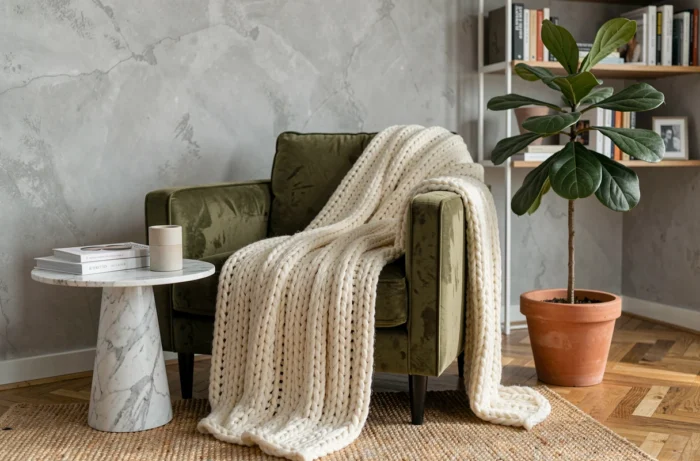
Pantone has chosen “Cloud Dancer” as the color of the year 2026. This slightly grayish off-white fits into a broader shift towards warm neutrals, observed over several seasons in trend forecasting offices.
Specifically, this Pantone choice validates a direction that many homeowners are already adopting for their walls: light, bright shades that serve as a backdrop for more pronounced decorative elements (textiles, objects, wall art).
Why warm neutrals work better in property decoration
A wall painted in off-white or rosy beige acts as an amplifier of space and natural light. Saturated colors, on the other hand, require much more demanding lighting and coordination work to avoid overwhelming the room.
A neutral base allows for changing the atmosphere without repainting. Simply modifying textiles (curtains, cushions, rugs) or adding an accent piece can transform the perception of a living room or bedroom. This flexibility explains why home staging professionals consistently recommend neutral palettes before a sale.
- Cloud Dancer: bright off-white, suitable for living spaces facing north or south
- Rosy beiges and greys: add warmth without visually reducing the volume of the space
- Terracotta as an accent: adds depth to a wall or furniture piece without dominating the room
Decor trends driven by social media: the influence of Gen Z
Interior decoration choices no longer originate in magazines or showrooms. According to an analysis published by NSS Magazine, decoration has become “performative”, calibrated to be photographed and shared on Instagram or TikTok.
Gen Z plays a driving role in this dynamic. Styles that go viral on social media directly influence the ranges offered by furniture brands, with a lag of just a few weeks between peak online visibility and shelf appearance.
What this means for a homeowner
Following a viral micro-trend (a type of candle, a vase shape, a wallpaper pattern) can give your apartment an immediate refresh. The risk is multiplying purchases of decorative items with a very short lifespan.
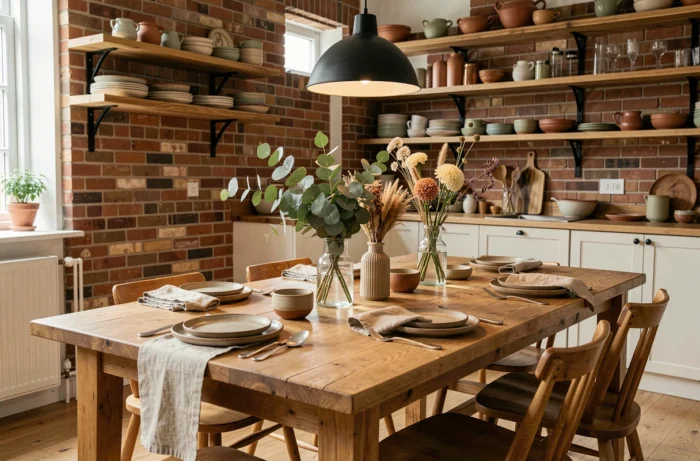
Investing in durable, structural pieces and reserving the “trend” budget for accessories remains the most coherent strategy. A natural linen sofa or a solid wood table will withstand several cycles of trends without appearing dated. Cushions, frames, and decorative objects can follow current inspirations without requiring renovations.
Materials and textures: balancing floors, walls, and furniture
The allocation of the decor budget among these three areas determines the overall visual impact. A quality floor (solid wood, large-format tiles) structures the perception of space far more than any accessory.
- Floor: the element that ages best and is noticed first during a visit, whether by a potential buyer or a guest
- Walls: the neutral palette mentioned earlier limits refresh work to a coat of paint every few years
- Furniture: favoring simple lines in natural materials ensures compatibility with future stylistic evolutions
- Textiles and lighting: the most accessible lever for changing the atmosphere of a room without touching the structural work
Trends observed at the 2026 trade shows confirm a marked return of light wood, rattan, and plant fibers in furniture. These materials naturally complement warm neutrals like Cloud Dancer, simplifying coordination among your decorative elements.
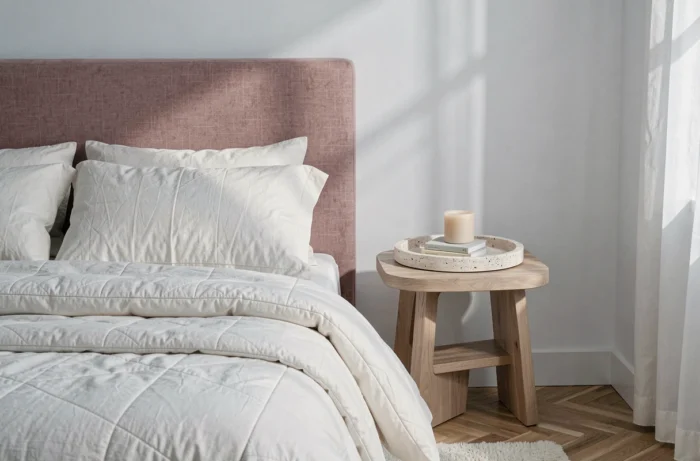
The most cost-effective choice in property decoration remains to concentrate spending on fixed elements (flooring, built-in lighting, storage) and allow accessories to absorb trend fluctuations. An interior built on this principle maintains its coherence and value over time.