Men’s fashion is undergoing a phase of reorganization. After several seasons where streetwear and loungewear dominated wardrobes, formal pieces are regaining ground in France since 2025-2026, driven by a significant increase in shirt sales according to data reported by Refashion. This movement does not signal a return to the strict suits of the 2010s, but a redefinition of what it means to dress with intention.
Shirt and tie worn differently: the re-formalization of men’s wardrobe
The return of the shirt to the men’s wardrobe does not go through the office. Current men’s fashion trends reposition it as a layering piece: worn open over a t-shirt, layered shirt over shirt, or tucked under a light jacket.
The tie follows a similar trajectory. Far from the tight Windsor knot on an Italian collar, it is now worn over a knit sweater or casually tied over an unstructured jacket. The silhouettes published on mister-tendance.fr illustrate this hybrid approach well, where the formal mixes with more relaxed pieces without losing coherence.
The shirt becomes a central piece of men’s style, but it operates in a different register from the corporate dress code. The collar, often a neglected detail, plays a structuring role here: open collars, short-point collars, or officer collars radically change the interpretation of the same cotton shirt.
Relaxed tailoring: men’s suits without rigidity
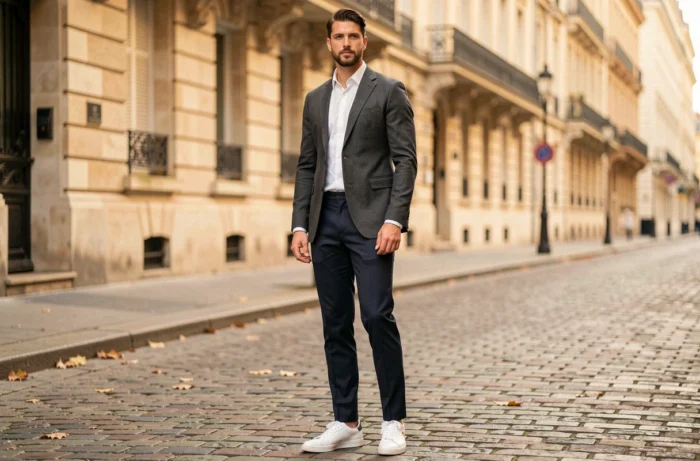
The Milan and Paris fashion shows for autumn-winter 2026 confirm a clear shift. The suit is back, but its codes have been rewritten. Shoulders lose their padding, cuts abandon excessive tapering, and materials prioritize comfort: soft wools, technical cottons, blended linens that allow for daily wear.
This evolution addresses a concrete problem. The traditional suit, tailored for the meeting room, no longer corresponds to fragmented days between the office, travel, and outings. Relaxed tailoring offers a third way between joggers and three-piece suits.
What changes in the cut
- Pants gain width at the thigh, with hems falling over the shoe rather than stopping above the ankle
- Jackets adopt natural shoulders without padding, resulting in a less structured but more fluid silhouette
- Mix-and-match sets (jacket from one fabric, pants from another) become as legitimate as the solid suit
This men’s fashion trend fits into what some specialized media call quiet luxury: a streamlined wardrobe, well-constructed pieces, subdued colors. Modern style is defined by the quality of the drape rather than by visible logos.
Eco-responsible materials and men’s fashion: where is the demand
Market studies on suits and safari suits indicate that about 40% of male fashion consumers report prioritizing eco-responsible materials. This figure, derived from reports on the menswear market, deserves nuance: stating a preference and changing purchasing habits are two distinct things.
What is changing concretely is the offer. Brands of formal ready-to-wear are now incorporating recycled fibers and certified cottons into their regular collections, not just in marketing capsules. Linen, a historical fabric of the summer wardrobe, is experiencing a resurgence of interest for men’s summer suits in 2026, driven by its low water consumption and natural drape.
The limits of the sustainable promise
Field reports diverge on this point: a garment made from recycled material is not automatically more sustainable than a classic dense cotton garment. Longevity also depends on construction, finishing, and care. A well-cut virgin wool blazer worn for ten years pollutes less than a recycled blazer discarded after two seasons.
Men’s accessories and shoes: the details that structure a style
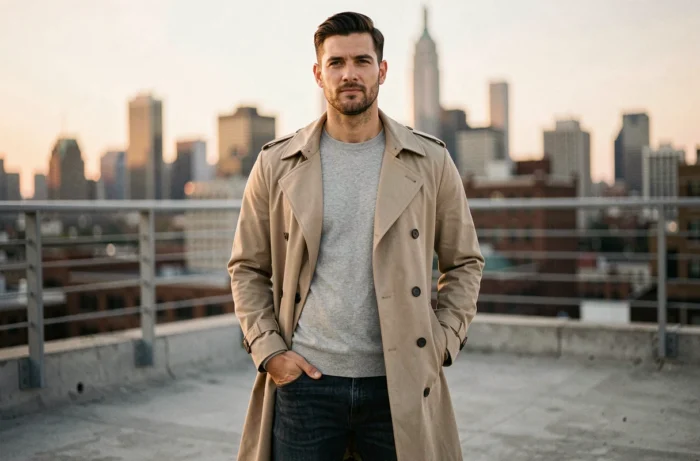
The return of the formal wardrobe mechanically leads to a renewed interest in structuring accessories. Leather belts, minimalist watches, and smooth leather shoes are gradually replacing sneakers as the focal point of the outfit. Leather returns in various forms: short jackets, crossbody bags, rugged-soled boots.
- Derby shoes and thick-soled loafers ensure the transition between relaxed tailoring and everyday city use
- Knit accessories (scarves, ribbed wool beanies) complete autumn-winter silhouettes without falling into sportswear
- Thick-framed glasses, often in acetate, serve as a marker of modern and elegant style without additional dressing effort
The autumn-winter 2026 men’s fashion trends favor a limited color palette: burgundy, forest green, anthracite gray, chocolate brown. These shades allow for easy coordination of clothing and accessories without resorting to risky combinations.
The men’s wardrobe is refocusing on durable pieces, worn with attention to drape and proportions rather than logos or ephemeral collaborations. Style is no longer built by accumulation but by subtraction, choosing fewer pieces but better articulated with each other. Stores that follow this logic offer curated selections, focused on materials and cuts, which align more closely with how men buy their clothes today.