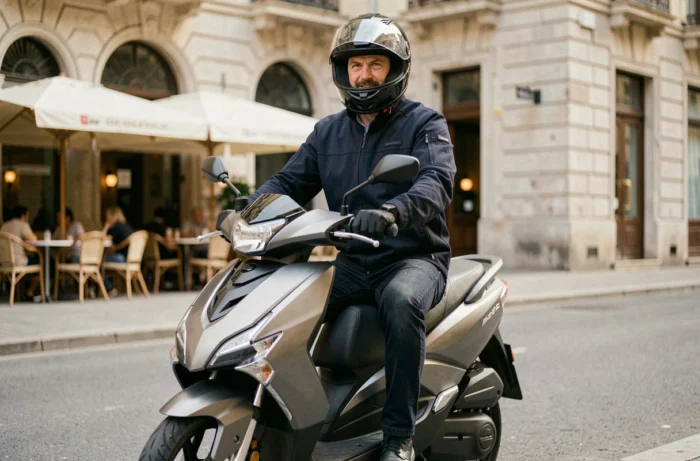
The market for thermal maxi-scooters is undergoing a transition. Sales of scooters over 50 cm³ have significantly declined in Europe in recent months, while Euro 5+ homologation standards are reshuffling the deck between 300 and 400 cm³ models. In this context, choosing between these two engine sizes is no longer just a question of raw power.
Euro 5+ Homologation and End-of-Life Vehicles: What Changes for Sustainable Purchasing
Euro 5+ compliance has become a central criterion for the marketing and resale of thermal scooters. Some 300 or 400 models have been re-homologated, while others were simply sold off before the standard change. Buying a non-Euro 5+ compliant scooter exposes one to a faster depreciation in the used market.
A European framework on end-of-life vehicles extended to category L (motorcycles and scooters) was adopted in 2026. This regulation directly affects motorized two-wheelers and could eventually influence recycling costs, thus impacting the total cost of ownership. This is a rarely considered angle in a comparison of 300 and 400 scooters, but it weighs on the five-year residual value.
For a buyer planning to keep their scooter for several years, checking the exact homologation of the targeted model and its compliance date becomes a reflex to adopt even before comparing technical specifications.
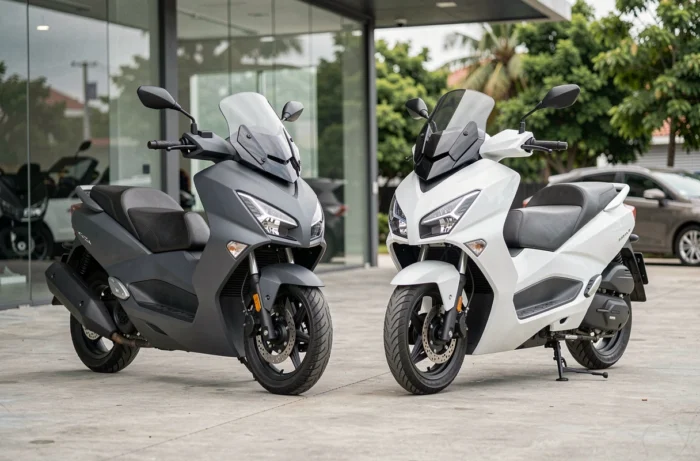
Real Cost of Use: 300 Scooter vs. 400 Scooter in Daily Life
Recent field feedback converges on one point: the useful boundary between 300 and 400 is not “urban versus highway”. A modern 300 handles suburban trips and even stretches of expressway very well. The 400, on the other hand, provides a significant torque reserve when riding two-up or on the highway, but this margin comes at a daily cost.
Fuel Consumption and Routine Maintenance
A 300 scooter generally consumes less than a 400 at comparable speeds. The gap widens especially in urban driving, where the 400’s engine often runs at low revs without utilizing its power reserve. On commute trips, this regular overconsumption adds up.
On the maintenance side, wear parts (brake pads, belt, tires) are often identical or very similar between a 300 and a 400 from the same range. However, the insurance for a 400 is systematically higher, as the fiscal power is greater. Over a three to five-year ownership cycle, this cumulative annual difference represents a significant budget.
Depreciation and the Used Market
The decline in thermal scooter sales in Europe may work in favor of the used buyer, with more frequent discounts from dealers. However, 300s remain more liquid at resale: their lower entry price attracts a broader audience, particularly recent A2 license holders.
Torque Reserve and Stability: When the 400 Justifies Its Extra Cost
The main argument in favor of the 400 cm³ does not concern top speed. It’s the ability to accelerate uphill, to overtake effortlessly on national roads, and to maintain a stable pace when carrying a passenger. On these three points, the difference with a 300 is tangible.
- When riding two-up with luggage, the 300 reaches its torque limits on long inclines and accelerations after tolls, where the 400 maintains a comfortable margin
- On the highway at sustained legal speeds, the 400 runs at a lower engine speed, reducing vibrations and fatigue on long trips
- In solo riding and urban or suburban trips, the 300 offers a more rational performance/cost ratio without noticeable compromise on riding comfort
The Yamaha XMAX and Honda Forza models illustrate this logic well. Their 300 and 400 versions often share the same chassis base and a comparable level of equipment (connectivity, traction control, under-seat storage). The difference focuses on the engine and its behavior under load.
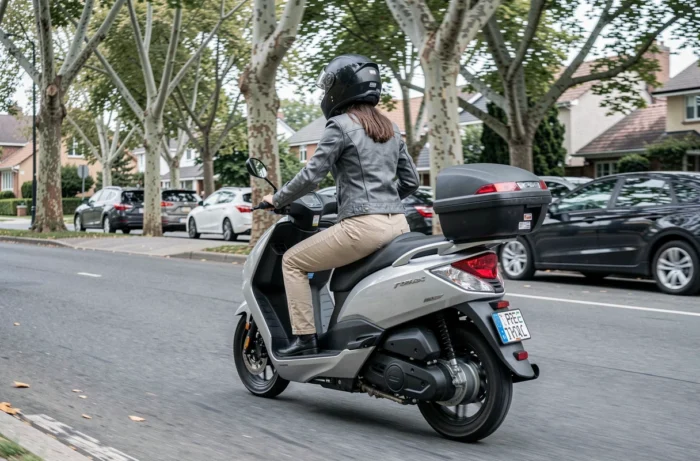
Trip Profile and Engine Size Choice: A Concrete Reading Grid
Rather than classifying scooters by fixed usage categories, it is more useful to reason by dominant trip profile. The table below summarizes the situations where each engine size has the advantage.
| Situation | 300 Scooter | 400 Scooter |
|---|---|---|
| Urban commute (less than 30 km) | Suitable, appropriate cost of use | Oversized, extra cost without real benefit |
| Mixed suburban with expressway sections | Sufficient solo | More comfortable two-up |
| Regular trips on highway or national roads | Acceptable solo, limited two-up | Suitable, useful torque reserve |
| Weekend touring with passenger and luggage | Limits reached quickly | Superior comfort and safety |
The choice between 300 and 400 depends on the most frequent trip, not the most demanding trip. A buyer who does 90% of their kilometers in the city and takes a touring trip once a month does not need a 400 for everyday use to cover occasional usage.
Declining Market and Available Models: The Purchasing Context in 2026
The thermal maxi-scooter segment is experiencing a sharper decline than other categories of two-wheelers in Europe. This drop has a concrete effect: unsold 2025 model stocks generate promotional offers from dealers, sometimes with substantial discounts on the 400s.
Some 300 and 400 models have been replaced or re-homologated with different timelines depending on the brands. Checking the production date and Euro 5+ compliance before signing remains the top priority, especially for a vehicle that has been in stock for several months.
Field feedback still diverges on whether the thermal 400 will retain its relevance against electric maxi-scooters in the medium term. The available data does not allow for a conclusion on this point, but the market trend pushes to consider residual value as a criterion of choice in its own right, alongside power or comfort.
A well-chosen 300 scooter, compliant with the latest standards and suited to its primary use, remains the most rational choice for the majority of daily trips. The 400 fully justifies itself as soon as regular two-up riding or long highway journeys come into play. The purchase price and engine size tell only part of the story: it’s the total cost over the ownership period that truly distinguishes these two categories.