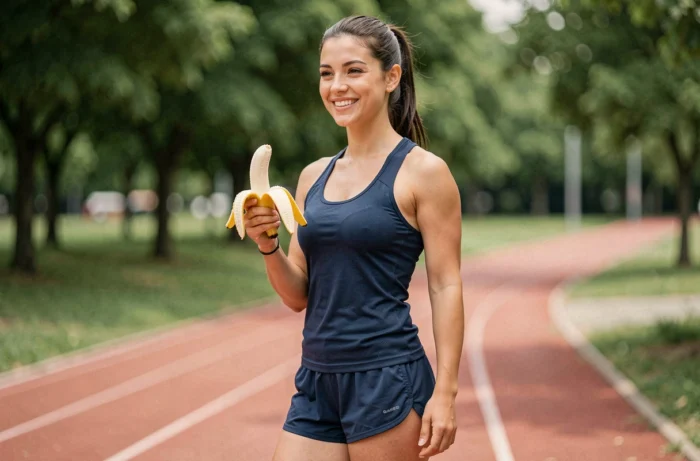
The choice of a banana for a sports context is not just about grabbing the first available fruit. The degree of ripeness, the timing of ingestion, and the actual amount of carbohydrates provided determine the effectiveness of this fruit on performance and recovery.
Resistant starch and glycemic index: what the skin color really reveals
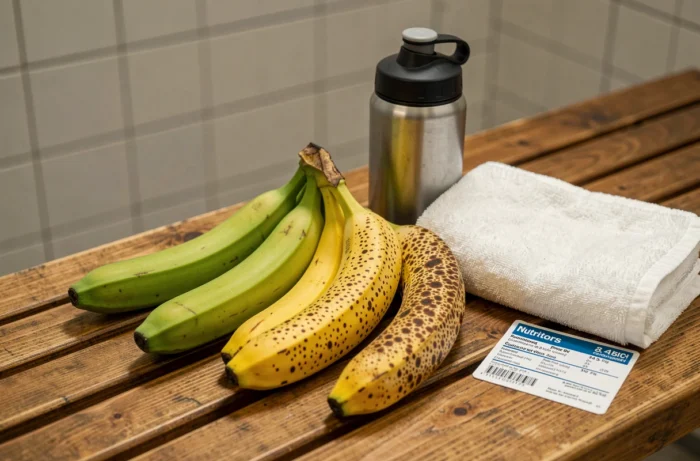
The carbohydrate composition of a banana changes radically between the green stage and the brown-speckled stage. A still-green banana contains a high proportion of resistant starch, a complex carbohydrate that the small intestine digests slowly. This starchy fraction decreases as ripening occurs, making way for simple sugars (glucose, fructose, sucrose).
In practice, this biochemical distinction has direct consequences on the field. A ripe yellow or slightly speckled banana releases its energy more quickly, making it suitable for consumption close to exertion. A green banana, with its still predominant resistant starch, causes a more moderate glycemic rise but can also generate digestive discomfort if consumed less than an hour before intense exercise.
We recommend selecting the degree of ripeness based on the consumption window. For a snack taken three to four hours before exertion, a firm yellow banana is appropriate. For the last thirty minutes before the start, a well-ripened banana with brown spots is preferable because its simple sugars are immediately mobilizable.
A detailed guide on bananas for sports on Bougez Chez Vous specifies the best varieties suited to the athlete’s profile and the type of effort aimed for.
Actual carbohydrate intake from a banana: calibrating expectations
The recommendations from the International Society of Sports Nutrition place the pre-exercise intake between 1 and 4 g of carbohydrates per kilogram of body weight in the one to four hours preceding exercise. A medium-sized banana provides about 20 g of carbohydrates. For a 70 kg athlete aiming for a moderate intake of 2 g/kg, this represents 140 g of carbohydrates needed, equivalent to seven bananas.
A single banana only covers a fraction of the recommended pre-exercise intake. It acts as a supplement within a structured meal (oatmeal, bread, rice), not as a unique source of energy.
During prolonged effort
For exercises lasting over an hour, nutritional protocols usually aim for 30 to 60 g of carbohydrates per hour, sometimes up to 90 g/h for very long events, provided that digestive tolerance has been trained. A banana consumed every 45 minutes can contribute to this goal, but combining it with a carbohydrate drink or gel allows reaching the threshold without overloading the stomach with fiber.
In recovery
After exertion, the banana provides potassium and carbohydrates that aid in the resynthesis of muscle glycogen. Pairing it with a source of protein (cottage cheese, almonds, whey) speeds up this recovery process.
Banana versus carbohydrate drink: when the fruit competes with the industrial product
Research shows that the banana can be as effective as a carbohydrate drink in maintaining performance during endurance efforts. It has an additional advantage: its richness in polyphenols and vitamin B6 gives it an anti-inflammatory potential that sugary drinks do not possess.
On the other hand, the banana contains fiber and solid volume that slow gastric emptying. For high-intensity efforts (short intervals, repeated sprints), an isotonic drink or gel remains more practical and better tolerated. The choice therefore depends on the type of discipline and intensity.
- Moderate endurance (long running, cycling, hiking): a ripe banana is an effective solid snack, to be complemented with water
- Mixed effort (trail running, football, team sports): alternate banana and carbohydrate drink to meet needs without discomfort
- Short high intensity (interval training, crossfit): prioritize a quickly assimilable liquid intake and reserve the banana for the meal before the session

Digestive tolerance and training the digestive tract
The digestibility of the banana varies significantly from athlete to athlete. Some tolerate it perfectly during exertion, while others experience bloating or gastric heaviness, especially with an insufficiently ripe fruit.
Digestive tolerance during exertion is developed in training, not on competition day. We regularly observe athletes testing their nutritional strategy only during a race, with predictable results. The intestine gradually adapts to digesting during exercise, provided it is exposed to it repeatedly.
A simple protocol consists of integrating half a banana during moderate intensity training sessions, then increasing the amount and bringing the intake closer to the start of exertion over the weeks. This tolerance work applies to any solid food consumed during exercise.
- Start with small pieces of well-ripened banana during easy outings
- Gradually increase the amount over three to four weeks
- Note digestive reactions to identify the individual comfort threshold
- Adjust the fruit’s ripeness: the more intense the effort, the riper the banana should be
Pairing the banana with the right foods for a complete sports meal
Consumed alone, the banana remains a partial snack. To build a balanced pre-exercise meal or snack, it benefits from being paired with complementary foods.
A bowl of oatmeal with a sliced banana and a handful of almonds provides complex carbohydrates, simple carbohydrates, fats, and plant proteins. This type of meal, taken two to three hours before exertion, covers a much broader nutritional spectrum than an isolated banana.
As a post-exercise snack, mashing a ripe banana into cottage cheese with a few almonds combines recovery carbohydrates and proteins for muscle repair. Adding a source of sodium (a pinch of salt, a slightly salty food) completes the replenishment of electrolytes lost through sweating.
The banana remains a remarkably convenient fruit for athletes, provided it is chosen at the right stage of ripeness, dosed correctly, and not attributed with virtues it does not have. It is an excellent component of a nutritional strategy, not a strategy in itself.