
Zoe Grospiron is known as a professional longboarder and vice-champion of Europe. Her father, Edgar Grospiron, an Olympic mogul skiing champion, occupies a prominent place in the media. Her mother, Nathalie Ville-Grospiron, remains much more discreet, almost absent from sports archives. Yet it is she who directed Zoe’s path toward the ocean, far from the snowy slopes of Annecy.
From Annecy to Anglet: the move that changed everything for Zoe Grospiron
Growing up in Annecy, the daughter of an Olympic skiing champion, the mountains seem like a given. The slopes, the snow, the resorts: everything points toward winter sports. Zoe Grospiron could have followed this path without anyone being surprised.
It was her mother’s choice that altered this trajectory. Nathalie Ville-Grospiron moved her family to the Basque Coast, in Anglet. This move placed Zoe facing the Atlantic Ocean, just minutes from the surf spots of Biarritz and the beaches of the Landes. For a teenager, the daily environment weighs heavier than a parent’s achievements.
Anglet is not just any coastal town. Surf culture is deeply rooted there, clubs are accessible, and the waves are consistent. Zoe discovered longboarding there, a discipline in which she later built her entire career. Several sources describe Anglet as her “maternal territory,” where Nathalie had her bearings and her network, prompting her to learn more about Zoe Grospiron’s mother and her role in this decisive geographical move.
Zoe’s surfing was born from a maternal connection to the Basque Country, not from a paternal legacy linked to skiing. This distinction is important for understanding her journey.
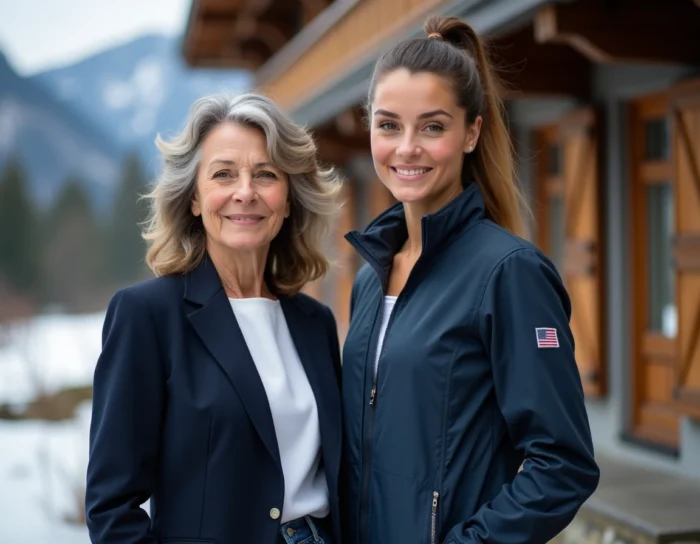
Nathalie Ville-Grospiron: a supportive role away from the spotlight
Nathalie Ville-Grospiron is not a media figure. She hardly appears in search results related to surfing or skiing. Zoe herself has begun to correct this imbalance, notably in the Caféine podcast from Surf Session, explaining that the choice of surfing and the Basque Coast comes directly from her mother.
Her role plays out on another level. Zoe has described the “strength” that comes from the <strong unwavering support of her mom, stepfather, and sister. This family core, organized around Nathalie, has allowed Zoe to balance international competitions and higher education at Kedge Business School.
Coordinator rather than spectator
Coordinating a longboard competition schedule with a university curriculum requires tight logistics. Surf seasons do not coincide with business school semesters. Each competition trip shifts exams, necessitating make-up sessions.
Nathalie has structured this daily management. She has also taught Zoe to talk about money without hesitation in front of sponsors, a reflex uncommon in French families involved in sports. She has filtered commercial solicitations and helped evaluate each partnership based on concrete criteria:
- The duration of commitment proposed by the sponsor and its compatibility with the sports calendar
- The counterparty requested in terms of content creation and social media presence
- The coherence between the brand’s values and Zoe’s positioning in women’s surfing
This framing work has allowed Zoe to sign with Roxy, a leading brand in women’s surfing, without getting sidetracked by poorly calibrated partnerships.
Paternal legacy versus maternal environment: what really mattered
Being the daughter of Edgar Grospiron opens doors, but not necessarily the right ones. The name attracts media attention, generates comparisons, and creates expectations. Zoe did not choose skiing. She also did not choose surfing in opposition to her father. She chose it because the ocean was there, right in front of her house, thanks to her mother.
Edgar’s legacy gave Zoe a culture of high-level competition. Mental discipline, pressure management, the ability to project long-term goals: this background exists. Edgar, who became a corporate speaker after his sports career, embodies a certain demand for performance.
Nathalie brought something else. A living environment, a geographical anchor, logistical stability. In professional surfing, where federal structures are less developed than in alpine skiing, family support often replaces institutional guidance. Mothers of professional surfers frequently take on roles as managers, accountants, press agents, without this work being recognized.
Former skier and mother of a surfer
Nathalie Ville-Grospiron is described by some sources as a former high-level skier. This personal sports background gives her an intimate understanding of what Zoe goes through: the fatigue of travel, injuries, doubts before a competition. She does not discover high-level sports vicariously.
This dual perspective, that of a former athlete and a mother, allows her to gauge her involvement. Zoe has emphasized that her mother knows when to intervene and when to step back. This balance distinguishes a structuring parent from an intrusive one, a balance that many sports families struggle to find.
Women’s surfing in France: why the role of mothers remains under-documented
The case of Nathalie Ville-Grospiron illustrates a blind spot in French women’s sports. Mothers who handle logistics, negotiate with sponsors, and stabilize the daily lives of their athlete daughters remain invisible. The media prefer the narrative of the champion alone against the waves.
In longboarding, a discipline still young on the professional scene, federal budgets are limited. Athletes like Zoe depend more on their family support than on a technical staff funded by a federation. This context makes the maternal role even more crucial.
- Managing social media and contractual obligations with sponsors often falls on family members
- International competition travel requires coordination that athletes cannot manage alone alongside their training
- The balance between higher education and a sports career relies on daily family management
Zoe Grospiron has chosen to make her mother visible. By naming her in interviews and publicly explaining her role, she contributes to documenting a reality that French women’s surfing shares with other individual sports. Nathalie Ville-Grospiron is not in the shadows by choice, but because the sports media narrative has yet to learn how to tell this type of commitment.