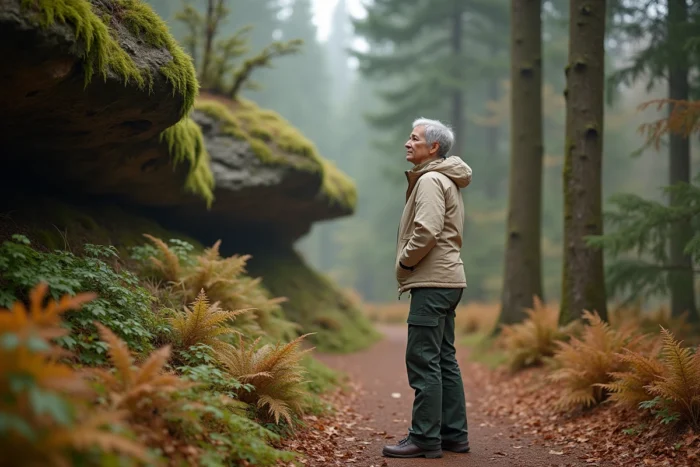
La Petite Pierre is located in the heart of the Vosges du Nord Regional Natural Park in Alsace. This perched village offers direct access to dense forests, marked trails, and preserved built heritage. Rather than listing dozens of possible outings, this article focuses on activities that take advantage of this unique natural setting, particularly the new practices guided by the territory.
Quiet Zones in the Vosges du Nord: What This Changes for Leisure Activities
Since 2024, the Hanau – La Petite Pierre community and the Vosges du Nord Regional Natural Park have been working together to define quiet zones aimed at protecting wildlife. This initiative has direct consequences on how hiking, trail running, or mountain biking is practiced around La Petite Pierre.
Specifically, certain forest areas are subject to temporary or permanent restrictions. New marked routes have been established to channel the flow of walkers away from sensitive habitats. For visitors, this means better-maintained trails, fewer random encounters with other users, and a calmer immersion in the forest.
Have you noticed that some trails that were once accessible are now diverted? This is the result of this consultation process. Far from being a constraint, these adjustments enhance the quality of the walk. More animals are observed, the sounds of the forest are better heard, and the proposed routes gain in landscape coherence.
To find all the routes, nature activities, and outdoor sports available in the area, you can check the leisure activities on the La Petite Pierre website, which lists the offers updated by the community.
Immersive Hikes with “Valeurs Parc” Guides
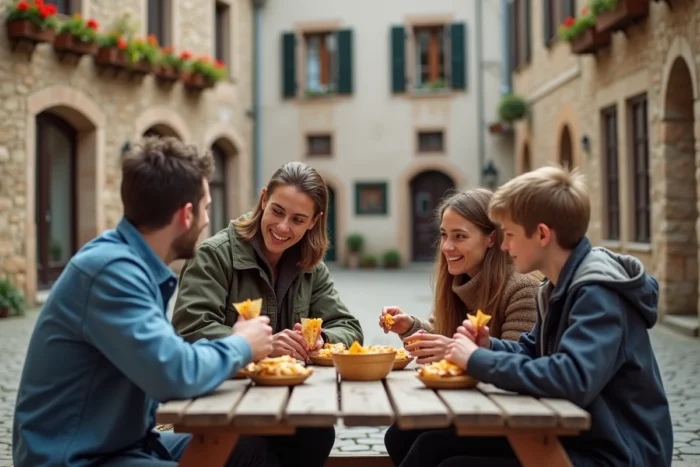
A simple list of trails is no longer enough to describe what can be experienced around La Petite Pierre. Since 2023, a network of certified mountain guides labeled “Valeurs Parc” offers guided nature outings, designed as true educational experiences.
Landscape Reading and Wildlife Tracks
These professionals are trained in environmental mediation. During an outing, they do not just guide: they explain how to read a forest landscape, spot deer tracks, or identify the typical plant layers of the Vosges du Nord.
For a family with children, this type of hike is a much better alternative to a free walk without markers. The guide adapts the pace, chooses a route based on the season and weather conditions, and provides context that even a good guidebook does not offer.
Understanding the Issues of Quiet Zones on the Ground
One of the recent contributions of these outings: awareness of quiet zones is done directly in the forest. The guide shows why a particular area is preserved, which species benefit from it, and how visitors can adapt their behavior without giving up the pleasure of walking.
This approach clearly distinguishes La Petite Pierre from classic hiking destinations. One does not walk just for the scenery; one learns along the way to grasp its subtleties.
Nature Activities in La Petite Pierre Beyond Hiking
Hiking dominates the offerings, but the area offers other outdoor activities worth exploring.
- Mountain biking on the marked trails of the Regional Natural Park, with routes adapted to the new layouts respecting quiet zones
- Guided wildlife observation outings, organized at dawn or dusk to maximize chances of spotting deer, roe deer, and birds of prey
- Nature activities offered by local organizations, combining educational workshops and field discovery for both children and adults
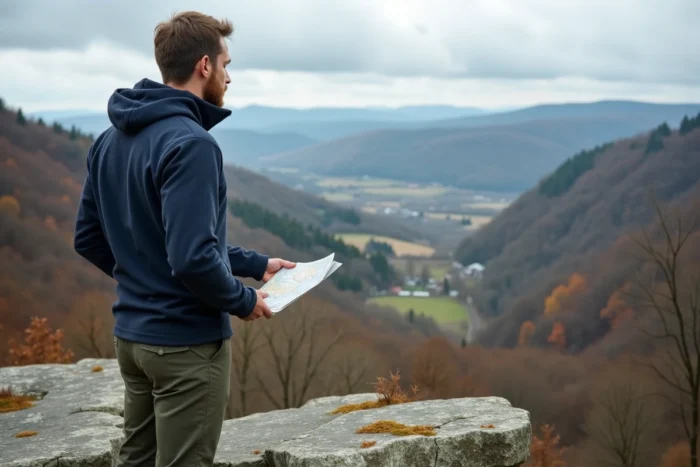
Why favor these guided formats? Because labeled activities provide access to areas that are sometimes closed to the general public. A certified guide can take a group into zones where individual traffic is restricted, opening up perspectives that would otherwise be inaccessible.
Built Heritage and Cultural Outings in La Petite Pierre
The village itself is a destination in its own right. The Château de La Petite Pierre, perched on a sandstone spur, overlooks the valley and houses the headquarters of the Vosges du Nord Regional Natural Park. There are permanent exhibitions on the geology, fauna, and flora of the massif.
The cobbled streets of the old town can be explored in about an hour. The pink sandstone architecture, typical of the region, gives the village a rare visual coherence. The built heritage complements nature discovery without competing with it, allowing for a day that alternates between forest walks and cultural visits.
For families, this combination works particularly well: a morning in the forest with a guide, lunch in the village, and then a self-guided visit of the castle and surroundings in the afternoon.
Choosing the Right Season for Activities in La Petite Pierre
The season radically changes the experience. Spring and autumn offer the best conditions for wildlife observation, with lower foot traffic on the trails. Summer concentrates the offer of guided activities, but the sandstone forests maintain a pleasant coolness even in hot weather.
- Spring: forest blooming, bird songs at peak activity, trails still little frequented
- Summer: complete program of nature activities, regular guided hikes, access to all the area’s facilities
- Autumn: deer rutting in the Vosges du Nord, spectacular forest colors, organized twilight outings
Winter remains feasible for hiking, but the guided offerings decrease and some trails may be temporarily closed to preserve the winter tranquility of the wildlife.
La Petite Pierre draws its uniqueness from this interplay between protected natural heritage and guided leisure activities. Recent developments, led by the Regional Natural Park and the community, are steering the area towards a tourism model where the quality of the experience takes precedence over the quantity of activities offered. This is precisely what makes a visit here different from an ordinary forest outing.