Sodium hypochlorite attacks the lignins and hemicelluloses of bamboo. On a living stalk as well as on a solid bamboo object, this oxidative reaction degrades the fibrous structure long before it provides any health benefit. The question of bleach on bamboo therefore deserves a nuanced answer depending on the type of material concerned.
Chemical reaction of hypochlorite on bamboo fibers
Bamboo has a silica content significantly higher than that of most hardwoods. This silica gives the fibers surface hardness, but it does not protect the organic matrix against a powerful oxidant. Sodium hypochlorite, even when diluted, breaks the bonds between cellulose chains and lignins that ensure the mechanical cohesion of the material.
On raw or oiled bamboo, we observe localized whitening from the first application, followed by softening of the surface fibers. The resulting micro-cracks become entry points for moisture and mold, producing exactly the opposite of the desired effect.
Solid bamboo and fiber composites do not react the same way. A bamboo fiber composite panel, whose matrix is a synthetic binder (melamine or phenolic resin), tolerates occasional disinfection with very diluted bleach. The manufacturer of bamboo fiber anti-collision panels intended for hospital corridors allows this protocol, provided that abrasive brushes are avoided and rinsing is done quickly.
In contrast, on solid bamboo (furniture, utensils, flooring), bleach remains contraindicated. Before considering using bleach on bamboo, it is essential to precisely identify the nature of the product to be treated.
Bleach on living bamboo in the garden: a prohibited practice
We recommend never pouring bleach on living bamboos, and this is for a reason that goes beyond simple ineffectiveness. The strengthening of the Labbé law has extended the ban on chemical phytosanitary products to private individuals in vegetated areas. The use of bleach as a herbicide on running bamboos is legally prohibited within this regulatory framework.
From a technical standpoint, bleach only destroys the aerial part and the superficial layer of the rhizomes. The root network of bamboo, which can extend several meters deep, remains intact and resumes growth within a few weeks.
The impact on the soil is more lasting than the effect on the plant. Hypochlorite destroys the bacterial microflora and mycorrhizae, depleting the soil for the following seasons. Any attempt to replant in an area treated with concentrated bleach encounters biologically dead soil for several months.
Maintenance of solid bamboo: alternatives to bleach for cleaning
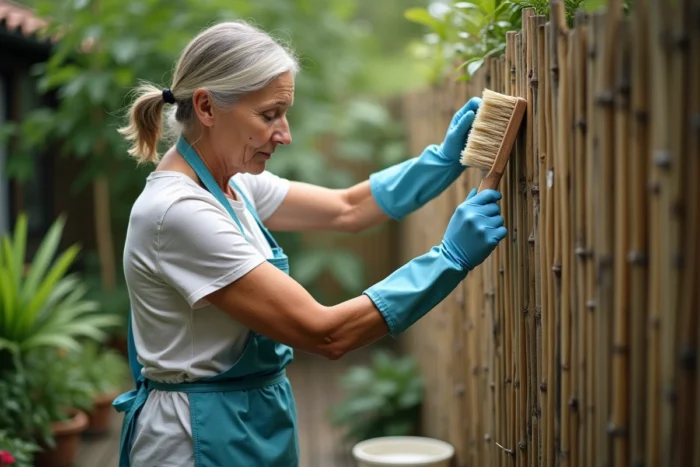
For furniture, kitchen utensils, and accessories made of raw bamboo, the cleaning protocol is based on three principles: little water, no oxidant, immediate drying.
- Warm water mixed with Marseille soap or coarse salt, applied with a soft cloth or a non-abrasive sponge, followed by a quick rinse with clear water
- Complete drying in the open air, horizontally for boards and utensils, to avoid water stagnation in the fibers
- Application of linseed oil once or twice a year to nourish the fibers, fill micro-porosities, and create a natural hydrophobic barrier
- In case of localized mold, clean with pure white vinegar applied with a brush to the affected area, followed by rinsing and immediate drying
White vinegar replaces bleach for the disinfection of raw bamboo without altering the fibers. Its acidic pH is sufficient to eliminate most surface fungal strains.
Case of varnished or oiled bamboo flooring
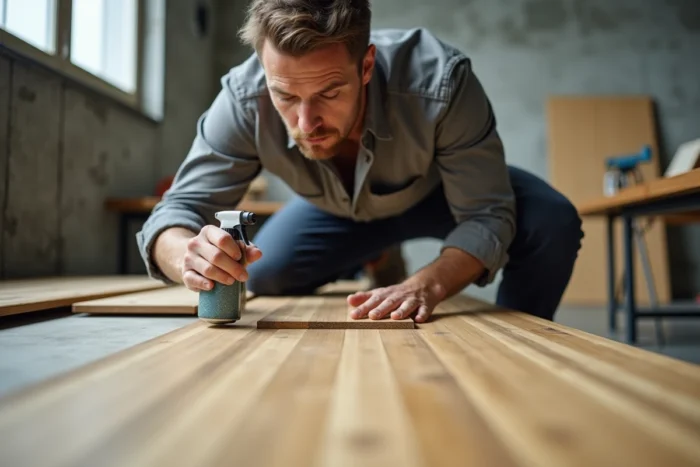
A factory-finished bamboo floor (varnished or oiled) tolerates even less bleach than raw furniture. The protective film, whether polyurethane or oil-wax based, degrades upon contact with hypochlorite. Whitish halos appear and the finish layer loses its adhesion.
Regular cleaning is limited to dusting followed by a well-wrung mop. For stubborn stains, a neutral pH cleaner is sufficient. The relative humidity of the room should remain between 45% and 60% to avoid shrinkage or swelling of the boards, especially during heating periods.
Protocol for bamboo fiber composites in healthcare settings
Bamboo fiber composite panels are the only case where diluted bleach can be used without degrading the material. These products, used as anti-collision wall coverings in hospitals or cafeterias, incorporate a resin that waterproofs the fibers.
The protocol boils down to three constraints:
- Low concentration of the solution (we are talking about diluted household bleach, not industrial concentrated bleach)
- Application with a microfiber cloth without mechanical scrubbing, to avoid scratching the surface of the composite
- Rinsing with clear water within minutes, without allowing the solution to dry on the panel
This protocol does not apply to garden furniture made of solid bamboo or kitchen utensils, even if treated. Only resin matrix composites tolerate brief contact with hypochlorite.
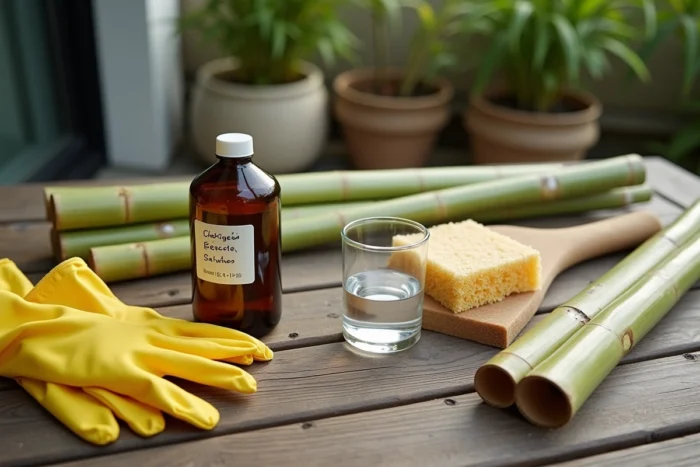
The answer lies in a clear dividing line: technical composite with synthetic binder on one side, solid, raw, or oiled bamboo on the other. For the latter category, which represents the vast majority of domestic uses (furniture, flooring, kitchen accessories, garden plants), bleach degrades more than it protects. White vinegar, Marseille soap, and linseed oil cover all maintenance needs without compromising the durability of the material.