
A patient consults about a localized bulge below the navel that has persisted for months despite regular physical activity. Her GP confirms that her BMI is within the normal range. In this specific case, the issue is not excess weight but a localized fat deposit that neither exercise nor diet can reduce. This is exactly the niche served by a belly-focused institute in Paris, with targeted body-contouring protocols such as cryolipolysis or BellySculpting.
Targeted body contouring or medical weight management: two distinct approaches
Before booking an appointment at an aesthetic center, it helps to clarify your actual goal. The French National Authority for Health (HAS) clearly distinguishes between the management of overweight or obesity, which is based on lifestyle changes (diet, physical activity, and reducing sedentary behavior), and aesthetic procedures, which aim solely to alter the body’s appearance.
A decree governing aesthetic medicine also specifies that aesthetic procedures have no therapeutic, functional, or diagnostic purpose. This framework sets out specific information and consent requirements. In other words, if you want to lose several kilos or address a metabolic imbalance, medical support is the way to go—not a cryolipolysis session.
By contrast, when targeting a specific area (the stomach, love handles, or saddlebags) on a body whose weight is stable, a belly-focused institute in Paris offers protocols tailored to this need for localized body contouring. The distinction between these two approaches determines the choice of practitioner, equipment, and expected results.
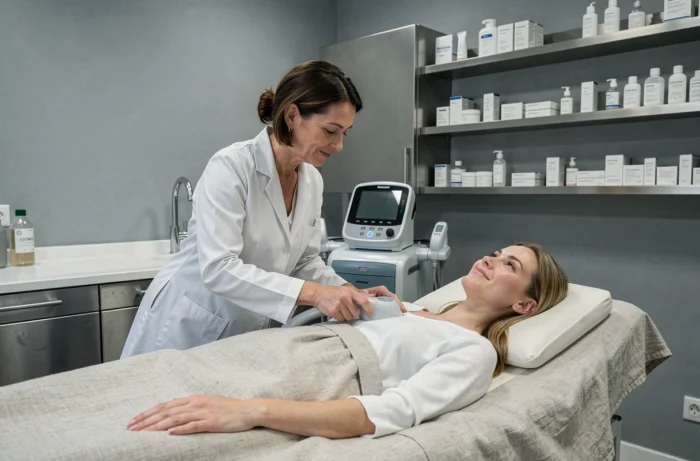
Cryolipolysis and BellySculpting: what these techniques really do to fat tissue
Cryolipolysis involves cooling fat cells in a targeted area to trigger their gradual destruction. The body then naturally eliminates these cells over several weeks. Results are therefore not immediate, and one session is no substitute for overall weight loss.
The HAS has identified potential risks associated with this technique: cold burns, sensory disturbances, and a condition known as paradoxical adipose hyperplasia, in which the treated area increases in volume instead of shrinking. This risk remains rare, but it makes it worth asking three questions before any session:
- Who performs the procedure: a trained practitioner, a technical operator, or a supervising healthcare professional?
- Which device is used, and does it have the appropriate medical CE marking for cryolipolysis?
- What protocol is followed: exposure time, temperature, and post-session follow-up?
BellySculpting combines several mechanical and thermal actions on the abdominal area. Unlike cryolipolysis, which targets fat exclusively, this method also works to firm the skin. This type of treatment is often available at specialist institutes such as Clinic Esthétique Lecourbe, which combines several technologies in a single protocol.
Body Slim 4 in 1 and pressotherapy: complementary treatments or alternatives?
The Body Slim 4 in 1 device combines ultrasound, radiofrequency, suction, and infrared in a single machine. The idea is to combine drainage, collagen stimulation, and localized fat reduction in one session. This multimodal approach aims to deliver more comprehensive results than cryolipolysis alone.
Pressotherapy, meanwhile, stimulates lymphatic circulation through sequential compression of the legs or abdomen. It does not destroy fat cells. Its role in an abdominal treatment protocol is complementary: reducing water retention and enhancing the feeling of lightness. Combined with a body-contouring treatment, it can improve post-session comfort.
Practical criteria for choosing a belly-focused institute in Paris
With so many centers offering slimming treatments in Paris, choosing one can be difficult. A few practical criteria can help narrow down the options quickly:
- Transparency about the equipment used: a reputable institute names its machines and their certifications. A lack of technical information on the website or during a consultation is a red flag.
- A preliminary body assessment: a personalized protocol starts with an evaluation of the area to be treated, the type of fat tissue, and skin elasticity. Without this assessment, the treatment is standardized and therefore less suitable.
- A clear distinction between aesthetic goals and medical needs: an institute that promises “weight loss” through cryolipolysis is confusing body contouring with weight loss, which calls its professionalism into question.
- Post-treatment follow-up: how many sessions are needed, how far apart they should be, and what recommendations to follow between appointments.
The number of sessions required varies depending on the thickness of the skinfold and the individual’s response to treatment. There is no universal standard: a protocol involving two sessions for a moderate bulge may require four or five for a larger area.
When to seek medical advice before any aesthetic treatment
A stomach that “swells” is not always a localized fat issue. Chronic bloating, diastasis recti after pregnancy, and functional digestive disorders: these conditions require a medical diagnosis before any aesthetic procedure. Treating a symptom with a body-contouring treatment without knowing its cause can lead to unnecessary expense or even make the problem worse.
The HAS emphasizes that managing overweight or obesity in adults requires a personalized approach that takes diet, physical activity, and lifestyle patterns into account. When BMI exceeds the normal range, the first appointment should be with a doctor, not at an institute.
A good first step is to consult your GP or a nutritionist to confirm that the area in question is indeed a localized fat deposit and that your weight is stable. This often-overlooked step helps you spend your money wisely and avoid relying on an aesthetic device to address a problem that requires comprehensive support.